Raised by the Tide at Quonnie Siren Oysters
There is something distinctly New England about standing waist-deep in cold salt water before most people have finished their morning coffee.
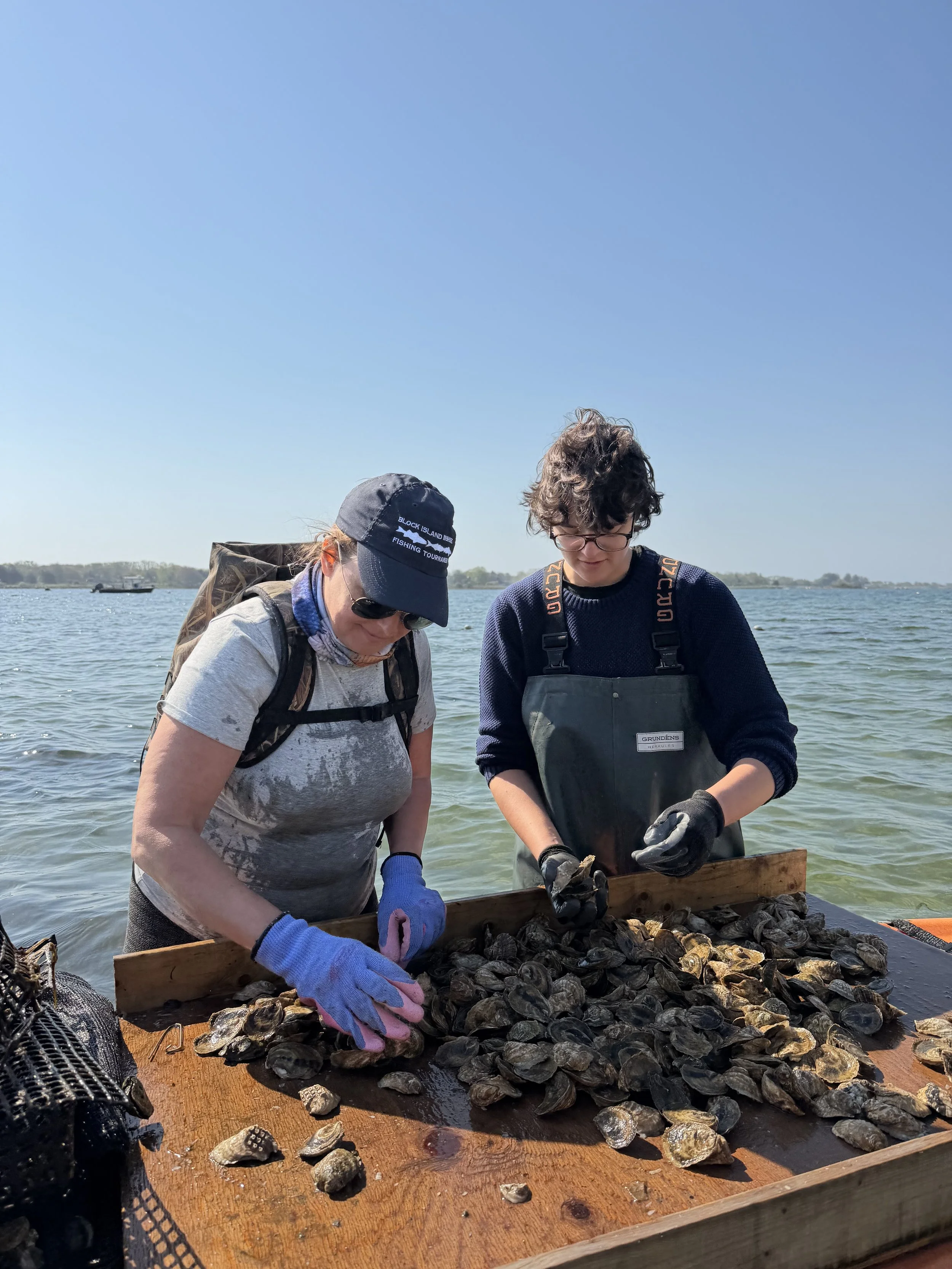
On a trip to Stonington, CT, we cruised through coastal Rhode Island and headed to Quonochontaug Pond in Charlestown to spend a morning with Quonnie Siren Oyster Co. and get a closer look at the people, place, and process behind an oyster we had recently encountered on Chef David Standridge's menu at The Shipwright's Daughter in Mystic.
Known locally simply as Quonnie, Quonochontaug Pond is one of Rhode Island's coastal salt ponds, connected to Block Island Sound by a breachway. Its highly saline water gives the oysters grown here a distinctive character—the farm describes its Quonnie Sirens as having a salty beginning followed by a buttery, creamy finish.
A Family Farm in the Salt Pond
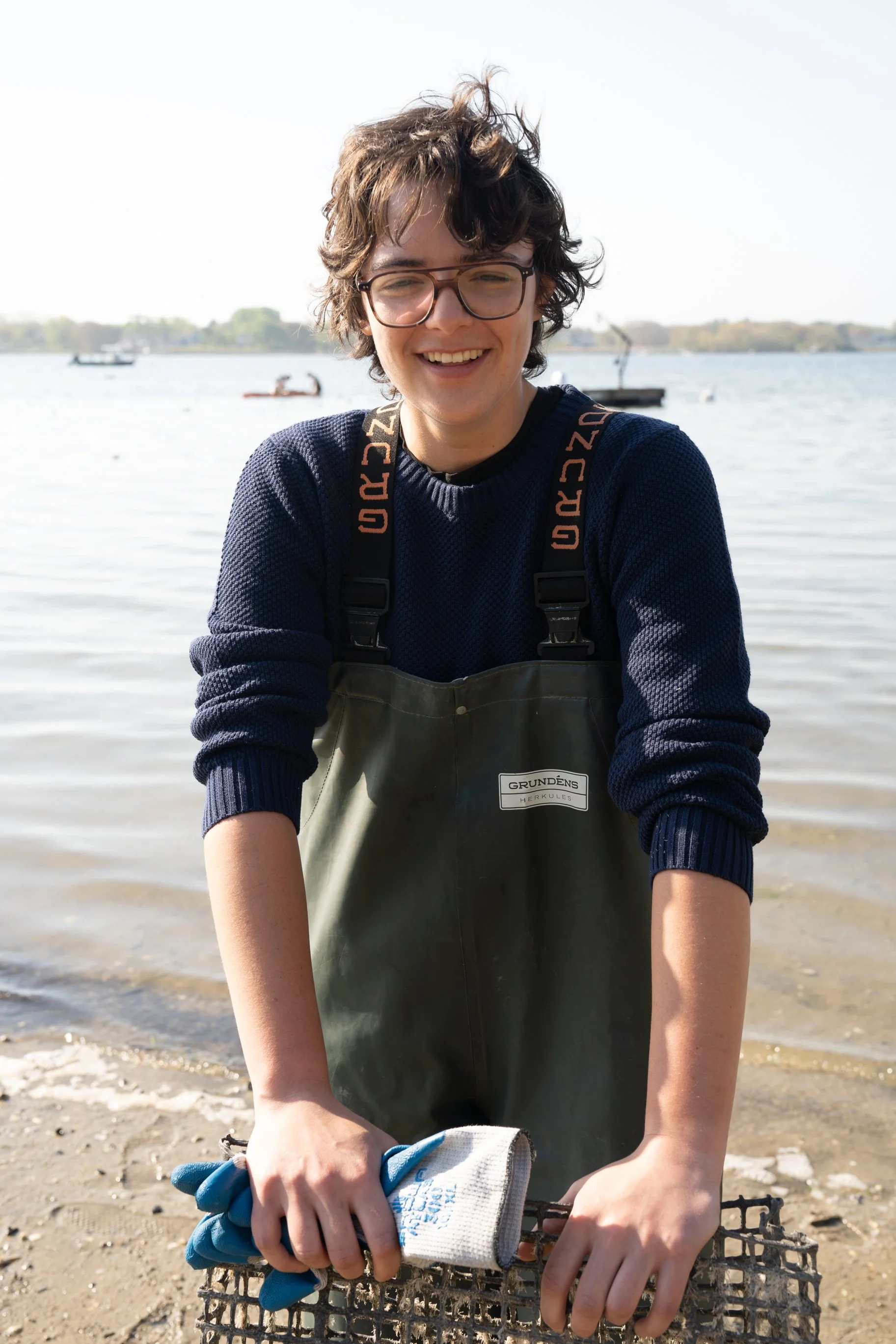
Quonnie Siren was founded by Jennifer Scappatura, who traded a career in fashion and design for one spent working the water. The farm became very much a family operation, with her daughters working alongside her.
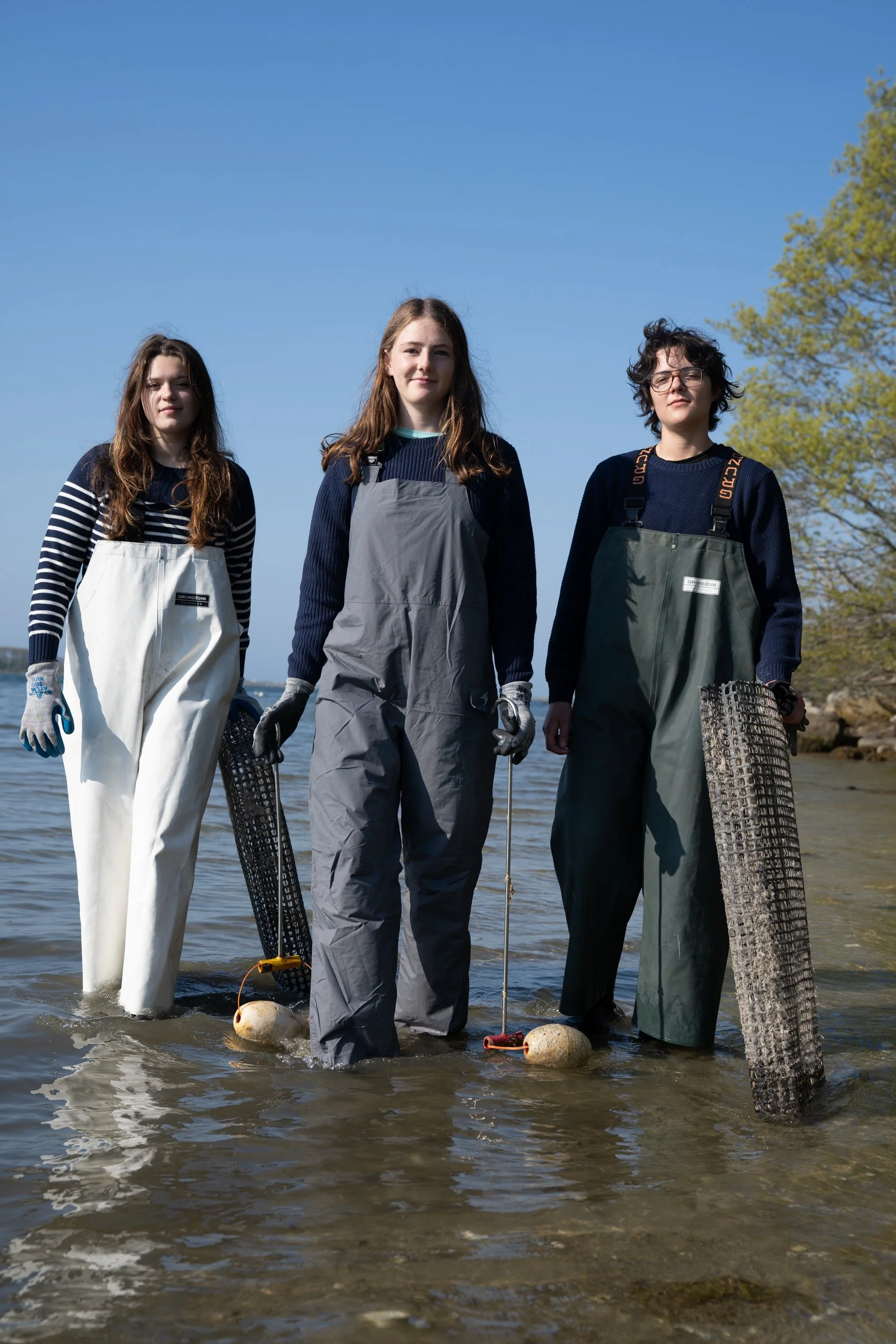
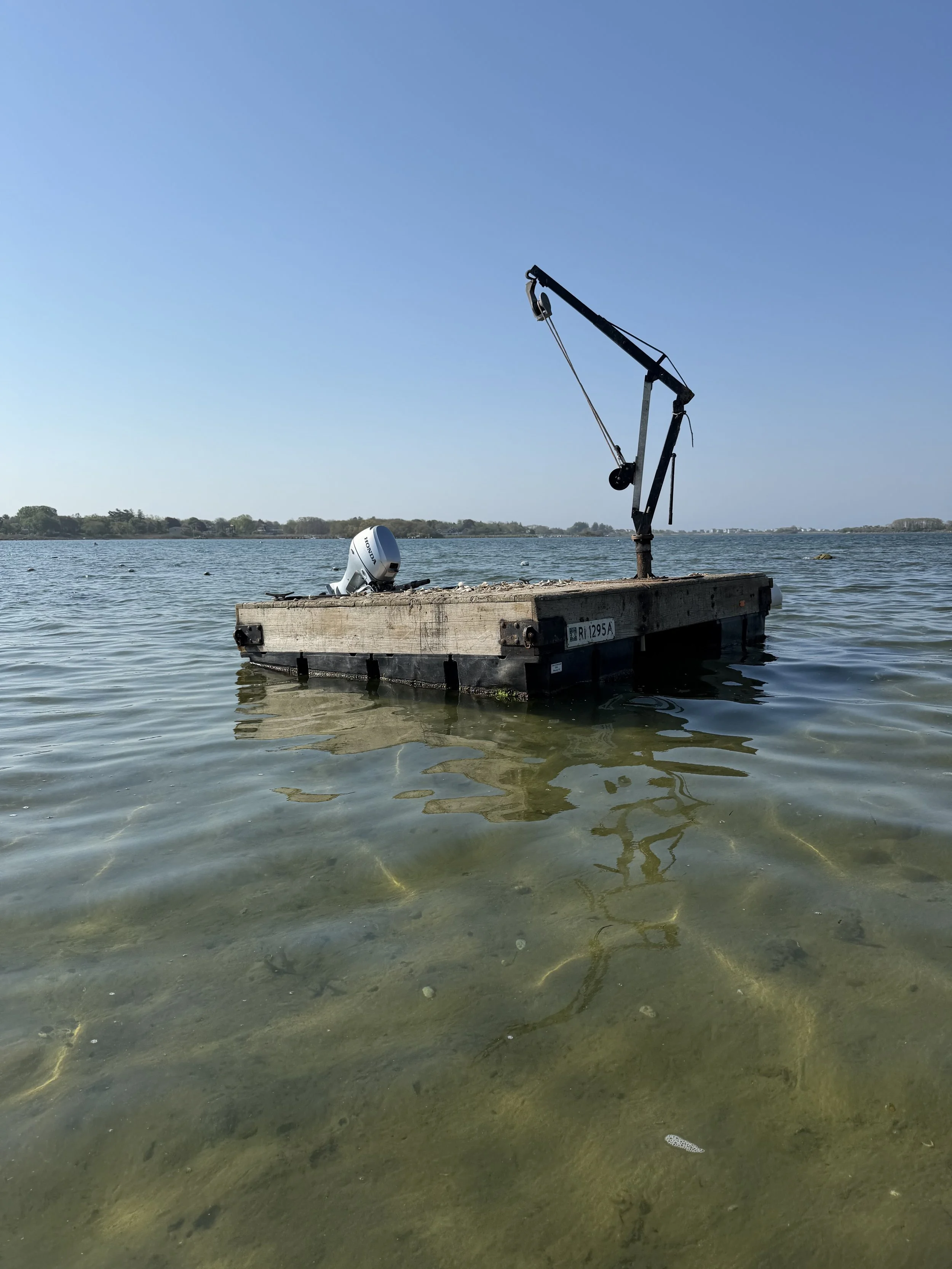
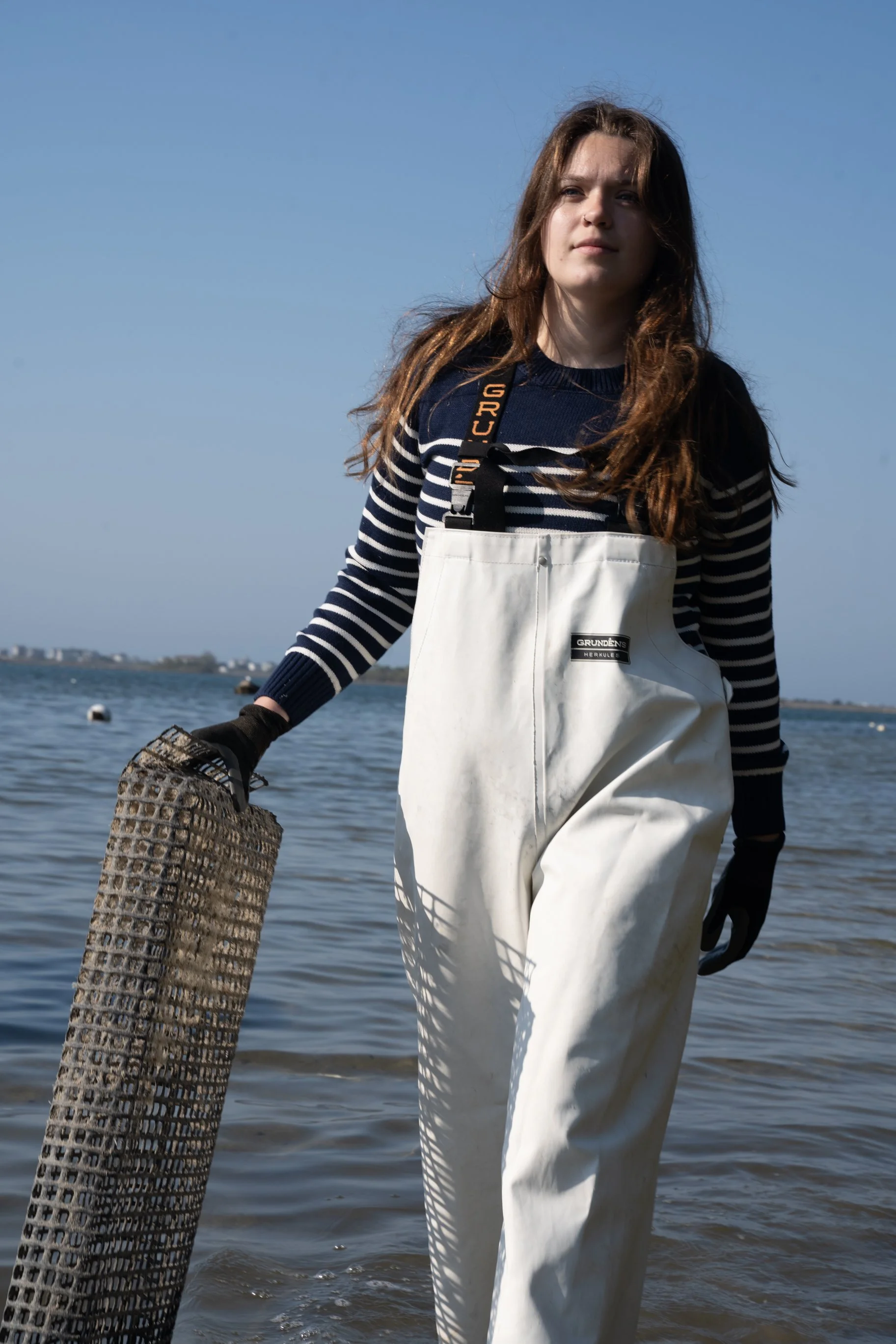
Out on the pond, oyster farming is decidedly less romantic than it can appear from a raw bar. There are heavy cages to move, bags to haul, oysters to sort, tides to work around, and plenty of time spent in waders. Our photographs from the morning capture some of that reality: a small crew standing in the shallows with oyster gear in hand, surrounded by the quiet blue water that makes the entire operation possible.
It's physical work, but also deeply connected to place.
From Seed to Siren
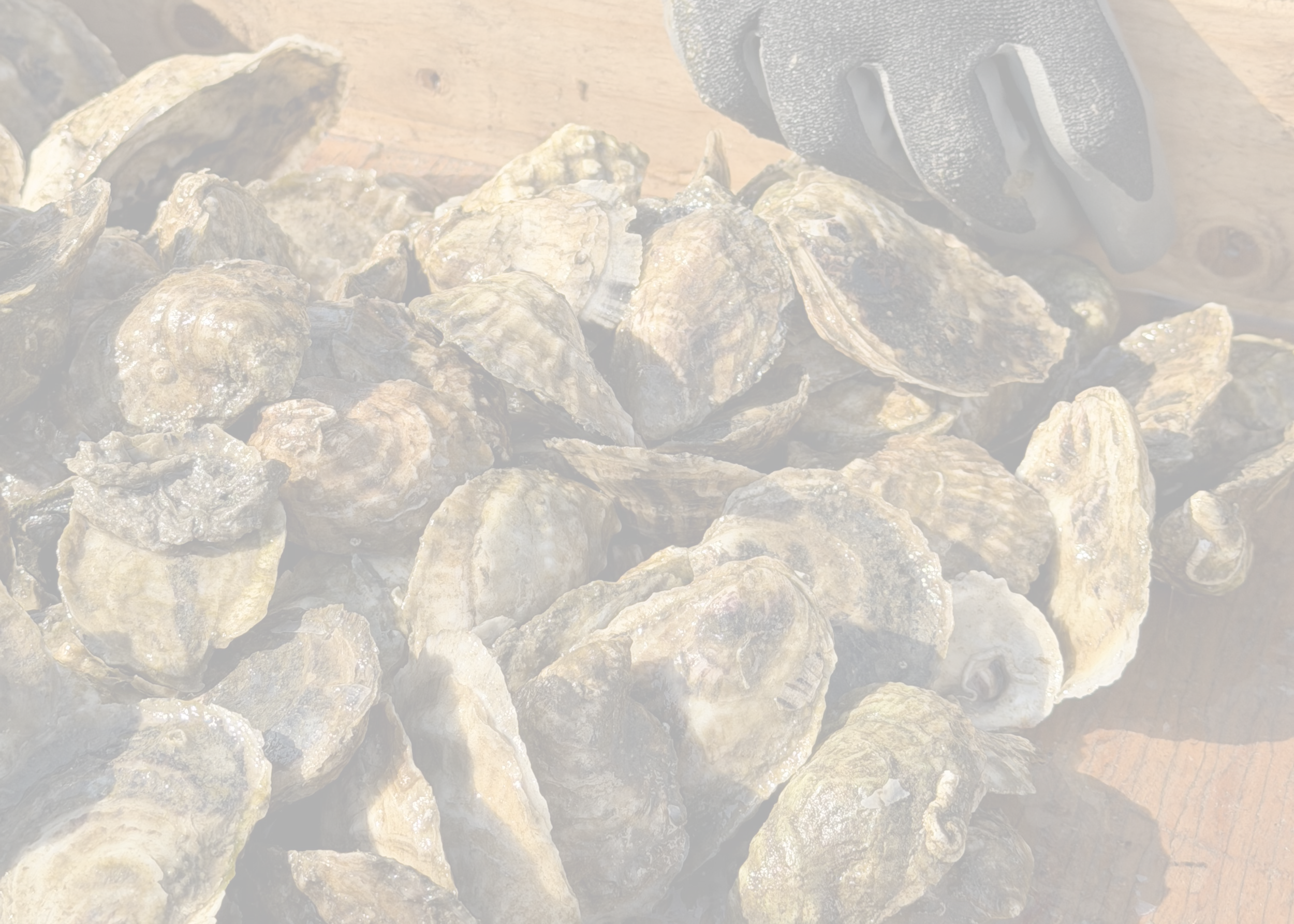
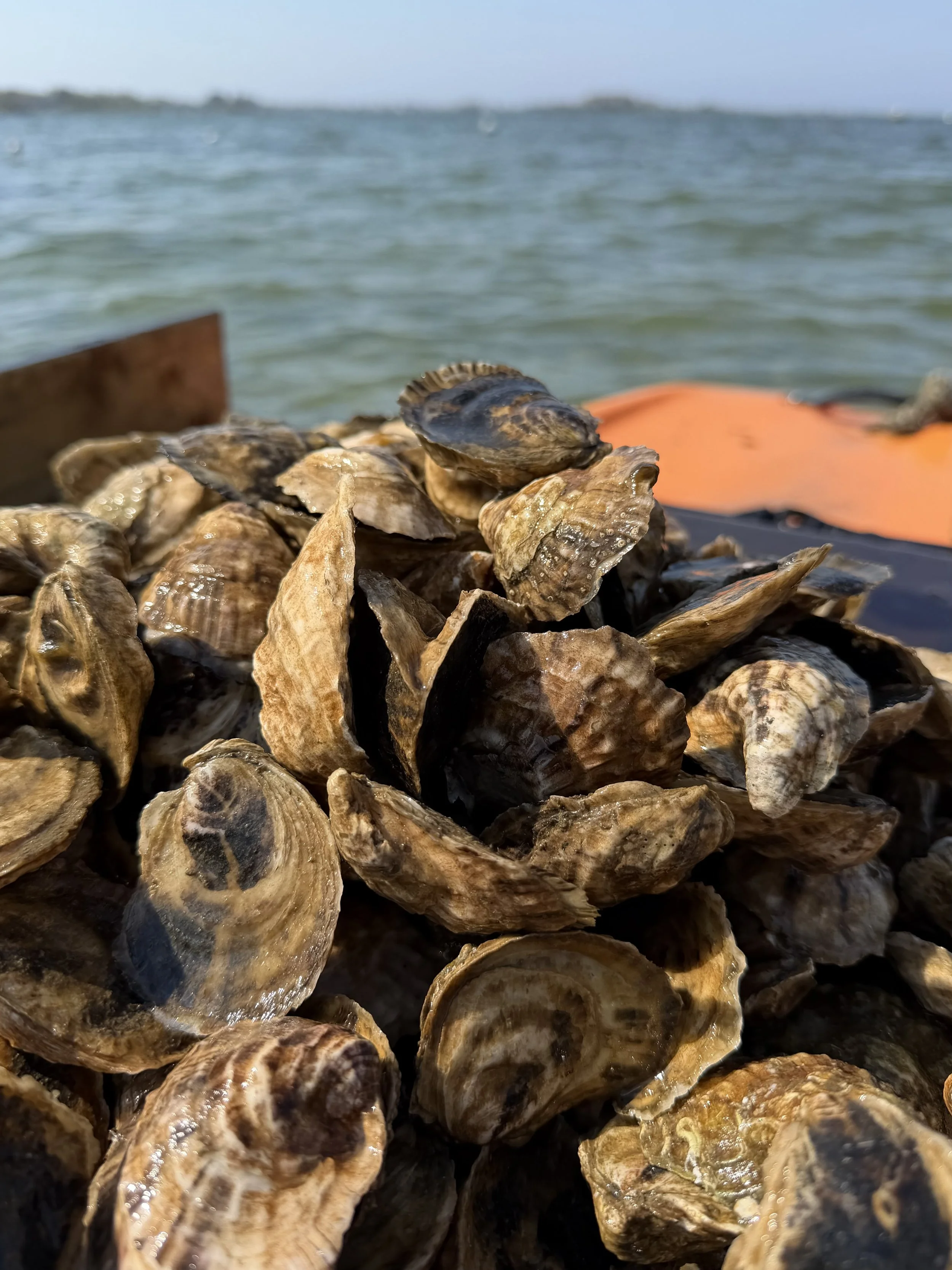
The oysters begin their lives small enough to be measured in millimeters. As they grow, they're tended and sorted before eventually reaching market size. Quonnie Siren has also used bottom culture as part of its operation—placing larger oysters directly onto the bottom of the pond, where they continue growing in a setting closer to a natural oyster bed.
It is an unusually direct relationship between an ingredient and its environment.
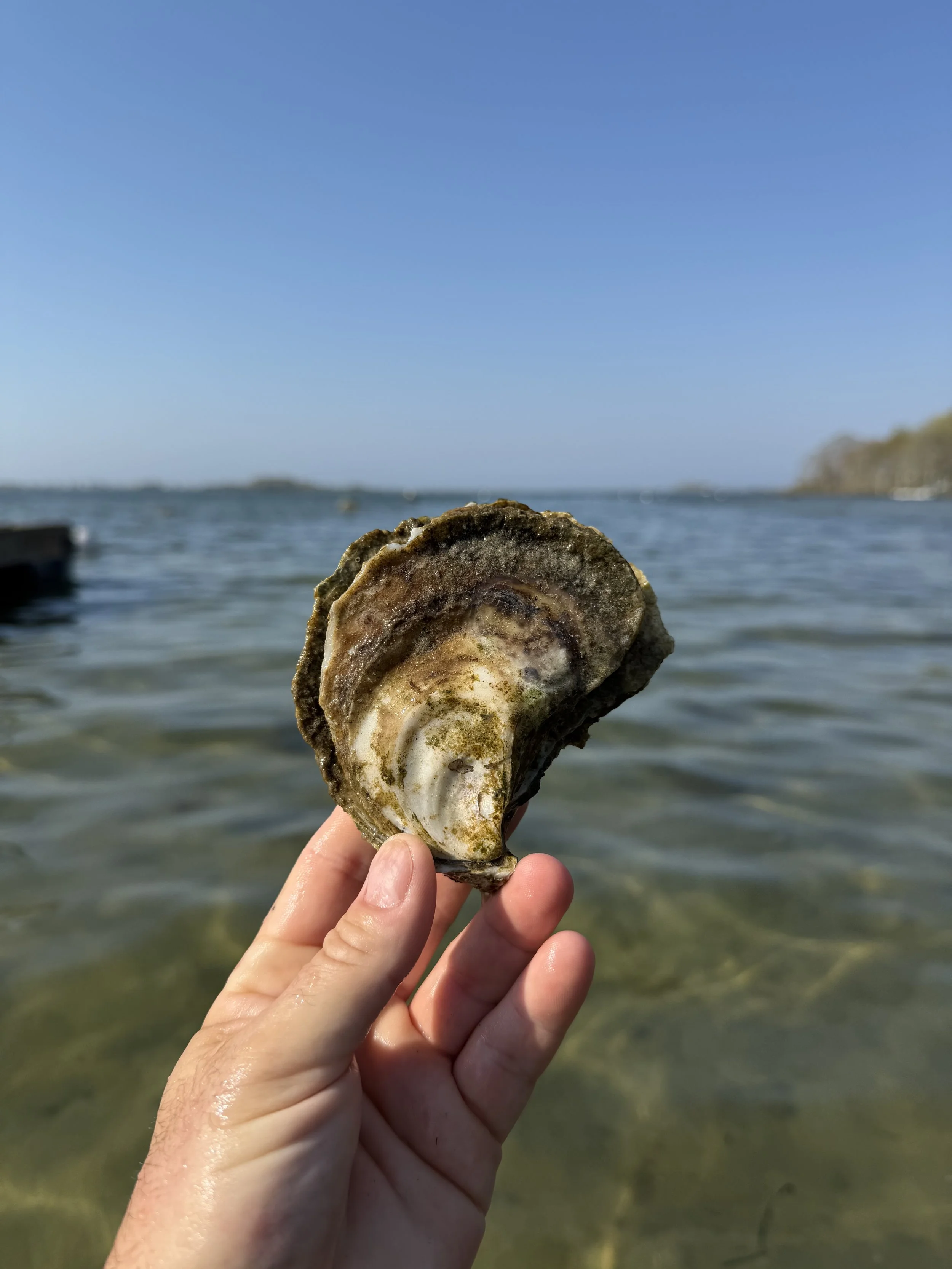
Standing on the farm, you begin to understand that an oyster isn't simply from Rhode Island. It is from this particular pond, influenced by this particular exchange of salt water, tides, bottom, temperature, and season.
That idea of provenance is easy to talk about in food. It's different when you're standing in the water where the food is actually being grown.
The Working Coast
For Long Wharf, visits like this are about more than finding a great oyster.
We have always been interested in the people keeping New England's waterfronts working—the fishermen, shellfish growers, boatbuilders, farmers, chefs, and small businesses whose livelihoods still depend on the coast.
Oyster farming occupies an especially interesting place within that story. The crop is food, but oysters are also part of the ecology of coastal waters. And the work demands a long tail view: growers tend an organism over seasons while responding to tides, storms, water conditions, and everything else the coast decides to send their way.
At Quonnie Siren, that relationship feels particularly visible.
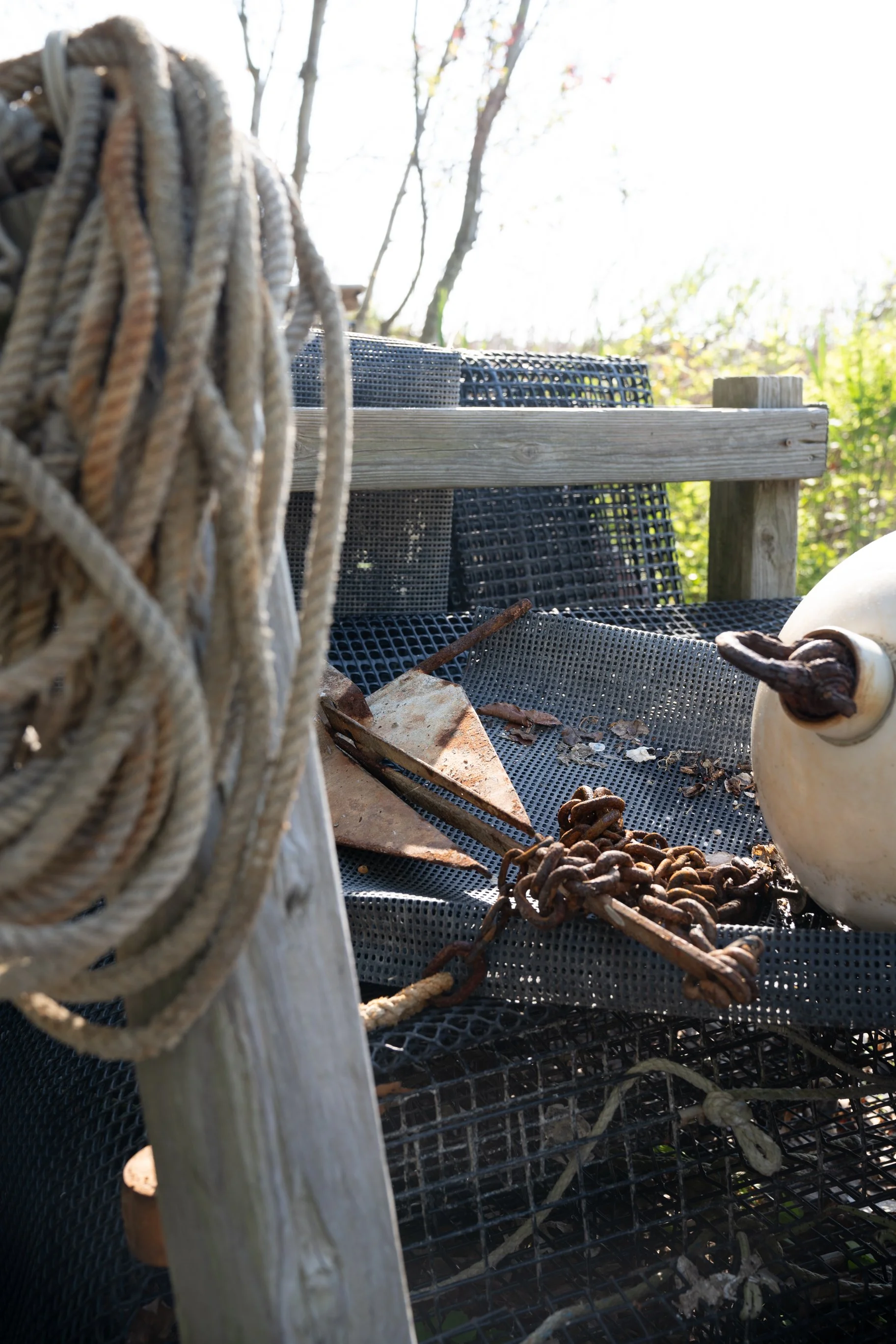
There isn't much separating the farm from the landscape around it. Just cages, lines, boats, waders, and people willing to get into the water and do the work.
Tide to Table
Later, encountering Quonnie Sirens on a restaurant menu felt different.
We knew the pond.
We had met the people standing in it.
We had seen the gear come out of the water and understood a little more about the work hidden behind the simple words local oysters on a menu.
Quonnie Siren calls the approach "tide to table"—a fitting description for a product whose journey from farm to plate can be remarkably short.
For us, it also describes something larger about the New England coast we love.
The best meals, the best products, and often the best stories begin with knowing where something came from—and knowing the people who made it possible.
On this particular morning, that story began waist-deep in the clear, cold salt water of Quonnie Pond.
A huge THANK YOU goes out to Jennifer, her team at Quonnie Siren Oysters, and Kathleen Standridge from The Shipwright’s Daughter who made this visit possible.